
Skin · RESEARCH GRADE
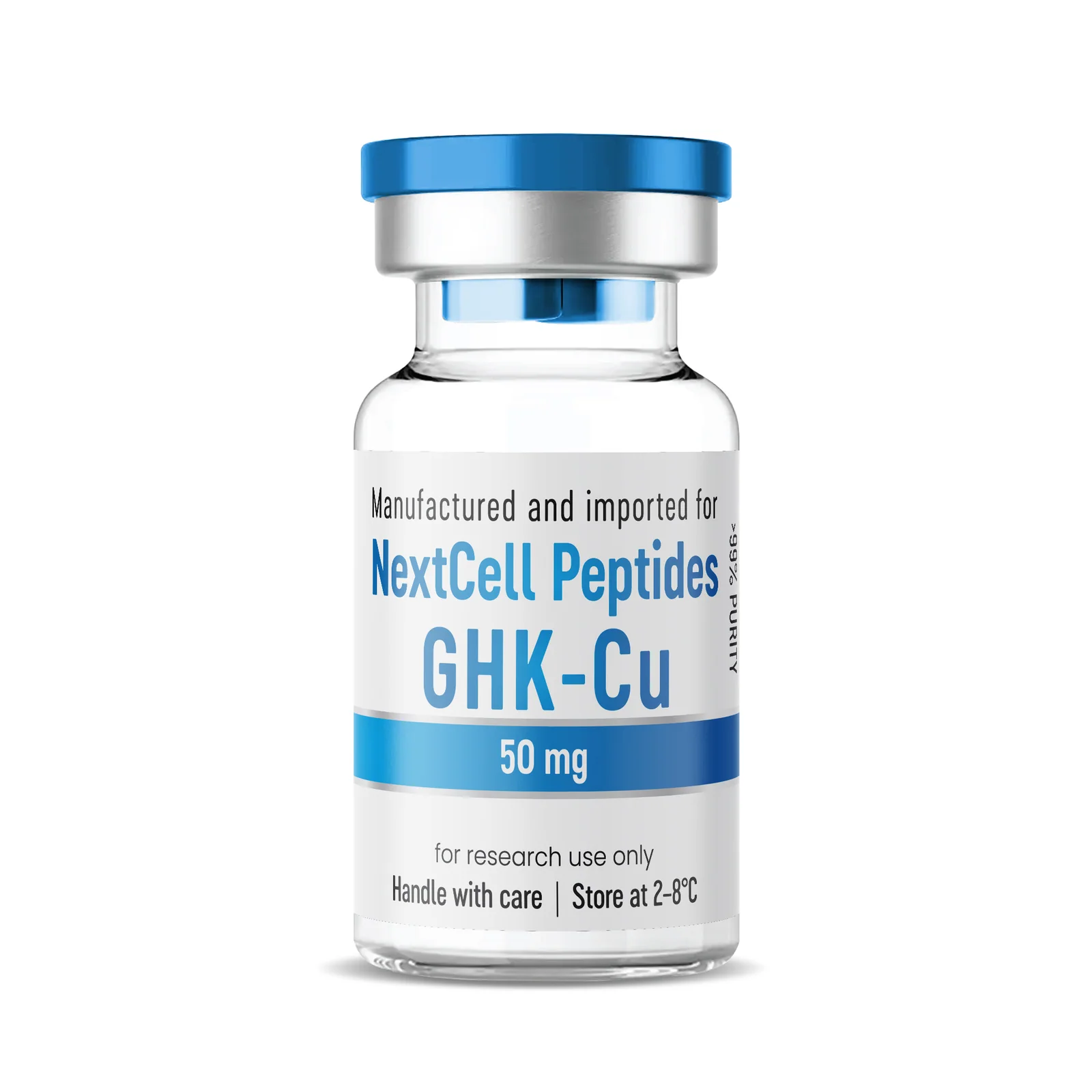
GHK-Cu
50 mg
High-purity GHK-Cu (Copper Tripeptide-1) 50 mg supplied in lyophilized form for laboratory research. ≥99% purity (HPLC), batch-tested with Certificate of Analysis (COA). For research use only.
- Purity
- ≥98%
- Molecular weight
- 340.38 g/mol
- Sequence
- Gly-His-Lys
- Storage
- Store at 2-8°C. Protect from light and moisture.
GHK-Cu 50 mg (Copper Tripeptide-1)
Overview
GHK-Cu (Copper Tripeptide-1) is a naturally occurring copper-binding tripeptide composed of the amino acids glycine, L-histidine, and L-lysine. It is found in human plasma, saliva, and urine, where it has been studied for its involvement in normal cellular and biochemical processes.
Because of its copper-binding properties and biological activity, GHK-Cu has become one of the most extensively investigated copper peptides in laboratory research. Current studies commonly explore its role in peptide biology, extracellular matrix research, cell signaling, and molecular biology.
FutureCell Peptides supplies Research Grade GHK-Cu 50 mg as a high-purity lyophilized peptide manufactured under controlled quality standards. Each vial is clearly labeled to support product identification and laboratory traceability.
Product Specifications
Product
GHK-Cu (Copper Tripeptide-1)
Quantity
50 mg
Appearance
Blue lyophilized powder
Purity
≥99% (HPLC)
Grade
Research Grade
What Is GHK-Cu?
GHK-Cu, also known as Copper Tripeptide-1, is a naturally occurring tripeptide that forms a complex with copper ions. Since its discovery in the 1970s, it has become one of the most extensively studied copper peptides in life science research.
Its ability to bind copper has made GHK-Cu a valuable research compound in laboratory studies investigating cellular communication, extracellular matrix biology, protein interactions, and peptide signaling. Research continues to explore its biochemical properties and functions under controlled experimental conditions.
Common Laboratory Applications
GHK-Cu is frequently investigated in laboratory research involving:
Copper peptide biology
Cell signaling
Molecular biology
Extracellular matrix research
Protein interactions
Cell culture research
Peptide pharmacology
Tissue biology
Biochemistry
Experimental peptide research
The specific application depends on the laboratory protocol and experimental objectives.
Why GHK-Cu Is Studied
GHK-Cu is studied because of its naturally occurring structure and its interaction with copper ions, which has made it an important research compound across multiple scientific disciplines.
Ongoing laboratory investigations continue to explore its biochemical characteristics, molecular interactions, and role in normal cellular processes under controlled experimental conditions.
Storage & Handling
Store refrigerated at 2–8°C.
For extended storage, keep frozen at −20°C.
Protect from moisture, excessive heat, and direct light.
After reconstitution, handle using appropriate laboratory procedures and avoid repeated freeze–thaw cycles whenever possible to help maintain sample integrity.
Choosing Research Grade GHK-Cu
When evaluating research peptides, consider factors beyond the reported purity.
Important considerations include:
HPLC purity testing
Batch consistency
Product labeling
Certificate of Analysis (COA) availability
Manufacturing standards
Appropriate storage recommendations
Packaging integrity
These factors help support reliable laboratory workflows and reproducible research.
Frequently Asked Questions
What is GHK-Cu?
GHK-Cu (Copper Tripeptide-1) is a naturally occurring copper-binding tripeptide composed of glycine, L-histidine, and L-lysine. It is widely investigated in laboratory research involving peptide biology and molecular biology.
Why is GHK-Cu studied?
GHK-Cu is commonly investigated in laboratory studies exploring copper peptide biology, cell signaling, extracellular matrix research, protein interactions, and molecular biology.
What does Research Grade mean?
Research Grade indicates that the product is supplied exclusively for laboratory research and analytical applications. It is not manufactured or supplied as a pharmaceutical product.
How should GHK-Cu be stored?
Store the lyophilized peptide at 2–8°C. For extended storage, freezing at −20°C is recommended. Protect the product from moisture, excessive heat, and direct light.
Is a Certificate of Analysis (COA) available?
Yes. Batch-specific Certificates of Analysis (COAs) are available to support product verification and laboratory documentation.
Research Use Only
This product is supplied exclusively for laboratory research and analytical purposes.
It is not intended for human consumption, veterinary use, therapeutic applications, diagnostic procedures, or use as a pharmaceutical product.