Research
Choosing NAD+ Laboratory Research Materials
Evaluate NAD+ laboratory research materials with clear specifications, batch documentation, purity data, and storage-aware handling for research-only use.
FutureCell Research Team · 7 min read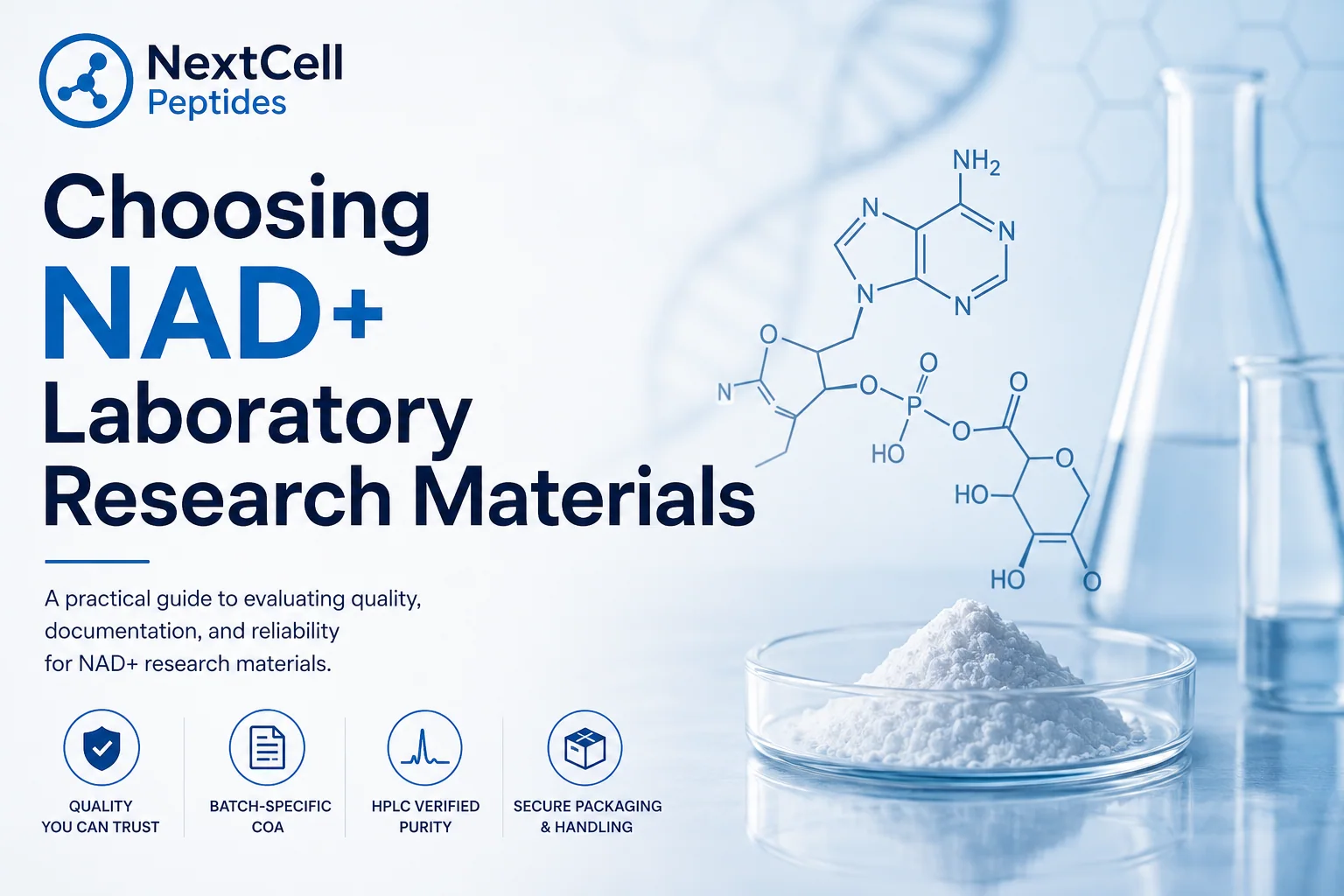
NAD+ is a compact but analytically demanding research compound. For researchers comparing NAD+ laboratory research materials, the product label alone provides only part of the picture. Identity, stated purity, batch-specific documentation, packaging, and handling information all affect whether a material is appropriate for a defined research workflow.
NAD+, short for nicotinamide adenine dinucleotide, is a coenzyme involved in oxidation-reduction chemistry and is widely examined in biochemical, cellular, and metabolic research settings. Its relevance to energy-transfer pathways makes it a familiar reference point in experimental work. That familiarity should not reduce scrutiny: research suitability depends on the quality evidence attached to the specific batch being evaluated.
What Defines Suitable NAD+ Laboratory Research Materials?
A suitable NAD+ research material begins with an unambiguous specification. The listing should clearly identify NAD+ in its oxidized form, state the supplied quantity, and distinguish the material from related compounds such as NADH, nicotinamide mononucleotide, or nicotinamide riboside. These compounds may be discussed within similar research areas, but they are not interchangeable analytical materials.
The product format also matters. NAD+ may be supplied as a dry, lyophilized material or in another defined research format. A clear format description helps researchers plan appropriate receipt checks, documentation review, and storage according to the supplier's stated conditions. It also reduces ambiguity when comparing products from different catalog listings.
For private customers purchasing research materials, the most useful product page does not rely on broad claims. It makes the practical details visible: compound identity, amount, declared purity standard where applicable, analytical method, batch information, and access to a Certificate of Analysis. These are the details that support comparison before a product enters a research setting.
Why Batch Documentation Matters for NAD+
A Certificate of Analysis, commonly called a COA, is the central document for evaluating a research batch. It connects the item in hand to a defined set of analytical results. A useful COA should include the product name, batch or lot number, test date, reported result, specification, and the analytical methods used.
For NAD+, identity confirmation and purity assessment are often the first points to review. High-performance liquid chromatography, or HPLC, is commonly used to assess chromatographic purity and identify the principal peak profile. The reported purity should be read alongside the method context rather than as a standalone marketing figure. A percentage without a batch number, method reference, or matching product identity has limited value.
Independent third-party testing can add another layer of confidence where it is available. It provides separation between manufacturing and analytical verification, particularly when the documentation is specific to the relevant batch. This does not mean every analytical question is answered by a single report. It means the buyer has stronger evidence for making an informed research-material selection.
Read the COA as a Batch Record, Not a Badge
A COA is most useful when its details can be matched directly to the product label. Check that the batch number corresponds, the compound name is specific, and the test results are clearly presented. If a document appears generic, lacks a date, or cannot be connected to the material being offered, it should not carry the same weight as batch-specific documentation.
Researchers should also distinguish between an assay result and a complete characterization package. HPLC can provide meaningful information about purity, but it does not automatically establish every possible attribute of a compound. Depending on the work involved, identity testing, moisture-related data, residual solvent analysis, microbiological testing, or other controls may be relevant. The right level of documentation depends on the intended research application and the analytical sensitivity required.
HPLC Purity: Valuable, but Not the Only Question
HPLC is one of the most recognizable quality terms in the research-compound market because it offers a practical way to examine component separation. In a well-documented result, the chromatogram helps show the relative profile of the sample and supports a stated purity value.
Still, HPLC purity should be interpreted carefully. A high stated percentage is meaningful only when the material identity, batch connection, and analytical conditions are credible. It does not replace responsible material handling, nor does it tell a researcher whether the product fits every experimental design.
For that reason, experienced buyers typically assess four points together: the compound specification, the batch-linked COA, the named analytical method, and the supplier's overall transparency. When these align, comparison becomes much more straightforward than relying on price or a headline purity number alone.
Packaging and Handling Affect Research Integrity
NAD+ is a research material whose condition can be influenced by environmental exposure. Product packaging should therefore be appropriate to the supplied format and should protect the material during fulfillment. Clear labeling is equally important, particularly where multiple compounds may be stored or reviewed within the same research inventory.
The supplier should provide storage guidance that is specific to the product format. Researchers should follow the stated label and accompanying documentation rather than assuming that all nucleotide-related materials have identical handling requirements. Conditions that may be appropriate for one compound, concentration, or format may not translate directly to another.
This is also where EU-based fulfillment can add practical value for customers located within the European Union. A supplier operating from the Netherlands can provide a more direct route to EU delivery while maintaining product labeling, batch traceability, and documentation continuity. Logistics are not separate from quality: the condition and traceability of the material at receipt are part of the wider purchasing decision.
How to Compare NAD+ Materials Before Purchase
When several NAD+ listings appear similar, compare what can be verified rather than what is implied. A lower price may reflect a smaller quantity, different documentation standards, a different material format, or simply less transparency. The strongest choice depends on the requirements of the research work, not on a single catalog metric.
Use the product specification to establish whether the material is the correct compound and format. Then review whether a current COA is available for the batch, whether HPLC or other testing is identified, and whether the stated purity is presented clearly. Finally, consider whether the supplier gives enough information to support traceability after purchase.
For researchers who want a concise decision framework, four questions are usually enough:
Is the compound identified clearly as NAD+ rather than a related molecule?
Does the listing state the supplied quantity, format, and research-use status?
Is batch-specific analytical documentation available and easy to match to the product?
Does the supplier explain its approach to testing, labeling, and fulfillment?
A transparent supplier should make these checks easier, not require buyers to infer the essentials. At FutureCell Peptides, this quality-led approach centers on professionally labeled research materials, Certificates of Analysis, and independent laboratory verification where applicable.
Research Scope and Responsible Product Evaluation
NAD+ is sold in this context as a laboratory research material. Product descriptions, purity data, and analytical documentation support research selection, but they are not evidence of therapeutic effect, personal suitability, or approved medical use. Keeping that distinction clear protects the quality of scientific discussion and helps customers evaluate materials on the basis that matters: defined specifications and verifiable quality controls.
The same principle applies when reading broader NAD+ research. Experimental findings should be considered within their original model, methods, and limitations. Results from in vitro or preclinical work are research observations, not automatic conclusions for humans. A credible supplier does not blur that line to make a product appear more compelling.
The best NAD+ material is not simply the one with the most prominent purity claim. It is the one whose identity, batch record, analytical evidence, and fulfillment details give you a clear basis for confident research selection.