
Research
Lyophilized Peptide Storage Quality Checklist
Lyophilized peptide storage explained: protect material identity, purity, and traceability with clear checks for labels, COAs, packaging, and shipping.
FutureCell Research Team · 8 min read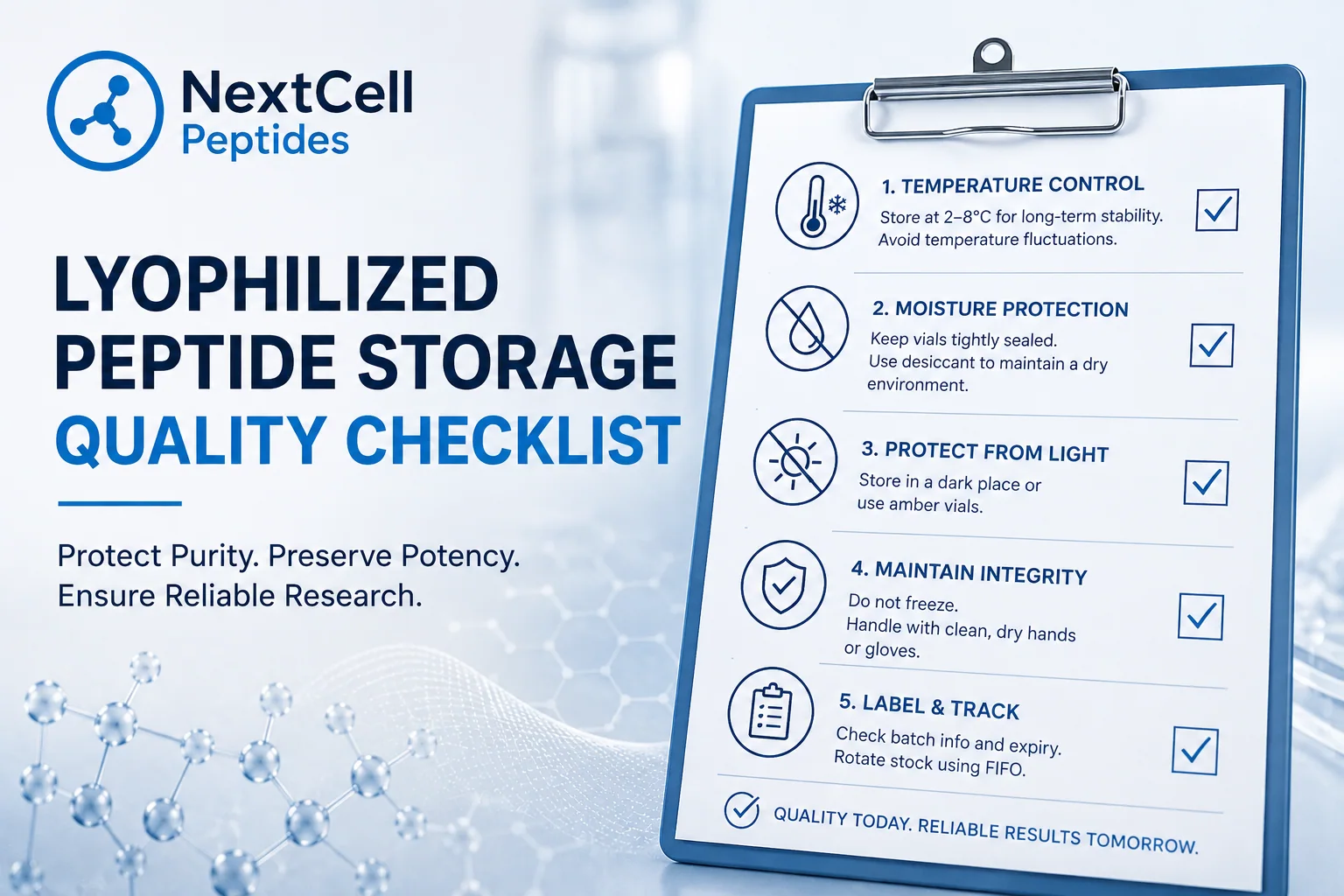
A peptide can leave a laboratory with a strong analytical profile and still become less suitable for research if its storage history is unclear. Lyophilized peptide storage is therefore not a minor afterthought. It is part of protecting the material's identity, physical condition, and documented quality from fulfillment through planned research use.
For private buyers comparing research peptides online, the practical question is not simply whether a vial is labeled “lyophilized.” It is whether the supplier provides clear specifications, appropriate packaging, batch-level documentation, and storage guidance that can be followed without guesswork. These details help establish confidence that a product has been handled as the labeled research material requires.
What Lyophilized Means for Peptide Stability
Lyophilization, also called freeze-drying, removes water from a peptide preparation under controlled conditions. The result is typically a dry solid or powder contained in a sealed vial. Reducing available water can limit several degradation pathways and generally makes many peptide materials more manageable for storage and transport than an equivalent material in solution.
That advantage is meaningful, but it is not absolute. A lyophilized peptide is still sensitive to its environment. Moisture exposure, elevated temperature, repeated temperature shifts, direct light, and compromised vial closure can all affect physical appearance or long-term material integrity. The degree of sensitivity depends on the individual peptide, formulation, vial format, and storage duration.
For that reason, product-specific instructions should always take priority over generic assumptions. A storage recommendation on the product label, technical specification, or accompanying documentation is more relevant than a one-size-fits-all rule found elsewhere.
The Core Conditions for Lyophilized Peptide Storage
The objective is straightforward: keep the unopened material in the condition specified by the supplier, protect it from avoidable environmental stress, and preserve a clear record of what happened to it after receipt. In practice, this means controlling temperature, moisture, light, and unnecessary handling.
Temperature consistency matters as much as temperature
Many research peptides are supplied with cold-storage guidance, often distinguishing between short-term handling and longer-term storage. The exact requirement varies by compound, so the labeled condition should be followed rather than inferred from another peptide in a catalog.
Consistency is also valuable. Frequent movement between storage environments can create avoidable stress and, in certain circumstances, condensation risk. A stable, monitored storage location is generally preferable to repeatedly relocating vials for convenience. If a product arrives after transit in a condition that differs from the stated expectations, document the package condition before making assumptions about the material.
Moisture is a central risk
The purpose of lyophilization is closely tied to water removal, which makes protection from moisture especially relevant. A vial should remain properly closed and be handled in a way that limits unnecessary exposure to humid air. Damaged seals, loose closures, or visible evidence that packaging has been compromised deserve attention.
The original secondary packaging can also serve a practical purpose by adding protection from humidity, light, and physical damage. Discarding labeled packaging immediately after delivery may make later batch verification more difficult. Keeping the vial and its identifying materials together supports better research records.
Light and physical protection are practical safeguards
Some peptide materials may be light-sensitive, while all small glass vials benefit from protection against impact. Store products in their original labeled container where possible and avoid placing them in areas exposed to strong light, repeated vibration, or accidental contact with food, household items, or unrelated laboratory materials.
Organization matters here. A crowded storage area creates avoidable opportunities for label loss, vial mix-ups, or physical damage. A simple inventory system is often more valuable than an elaborate one, provided it records the product name, batch or lot number, quantity, receipt date, and designated storage condition.
Before Storage: Check the Product and Its Documentation
Storage begins when the package arrives. Before placing a vial into its designated environment, compare the delivered item with the order details and inspect the outer package for obvious damage. Confirm that the product label is legible and that the peptide name, quantity, and batch or lot identifier are available for reference.
A Certificate of Analysis is particularly useful because it connects a specific batch to documented analytical information. Depending on the product and supplier, this may include peptide identity, purity results, chromatographic data such as HPLC, mass-related analysis, and the batch number. The key point is traceability: the documentation should correspond clearly to the vial or batch received.
At FutureCell Peptides, product quality documentation and independent testing information are intended to give customers a clearer basis for evaluating research materials. A COA does not replace correct storage after delivery, but it establishes a documented starting point for the batch entering a research inventory.
Lyophilized Peptide Storage After a Vial Is Opened
An unopened vial and an opened vial do not face the same handling considerations. Once the original closure has been disturbed, the chance of moisture exposure and labeling errors increases. This does not mean the material is automatically unsuitable, but it does mean recordkeeping and product-specific handling become more important.
Marking the date of first opening, retaining the batch number, and maintaining the supplier's specified storage condition can help preserve traceability. Avoid relying on memory, especially when several compounds have similar vial sizes or labels. A research inventory should make it easy to answer basic questions later: which batch was used, when was it opened, and where was it stored?
If a peptide is prepared into a solution for research work, its stability profile may differ substantially from the lyophilized form. Storage guidance for dry material should not be assumed to apply after preparation. Refer to the applicable product information and research-specific requirements rather than extending dry-vial assumptions to another format.
Warning Signs That Call for Review
Visual inspection is useful, but it has limits. A clean-looking vial does not independently verify purity or identity, and an unusual appearance does not always identify the cause. Still, certain observations justify pausing and reviewing the material history: a cracked vial, missing or unreadable label, visibly compromised seal, signs of moisture exposure, unexplained discoloration, or a package that arrived in clearly damaged condition.
When this happens, preserve the packaging and batch information. Compare the vial with the COA and product specification, and contact the supplier with clear photographs and order details if clarification is needed. This approach is more productive than trying to determine material quality from appearance alone.
Storage Quality Starts With Supplier Selection
The most careful storage practices cannot compensate for poor traceability before purchase. When comparing research peptide suppliers, look beyond product names and headline purity claims. Clear labeling, stated storage conditions, batch-specific COAs, transparent analytical methods, professional packaging, and reliable fulfillment all contribute to a more defensible research-material record.
For EU customers, EU-based fulfillment can add practical value by reducing unnecessary transit complexity and making delivery expectations easier to assess. It does not eliminate the need for a receipt inspection, but it supports a more controlled path from supplier to storage location.
A well-stored lyophilized peptide is not defined by one universal temperature or a single packaging feature. It is defined by disciplined alignment between the product's stated requirements, documented batch identity, careful receipt inspection, and consistent storage records. That is the standard worth carrying forward with every vial.