
Guides
How to Choose a High-Quality Research Peptide Supplier: The Complete Buyer's Guide
Learn how to choose a reliable research peptide supplier by evaluating product quality, analytical testing, transparency, packaging, storage guidance and customer support before you buy.
FutureCell Research Team · 12 min read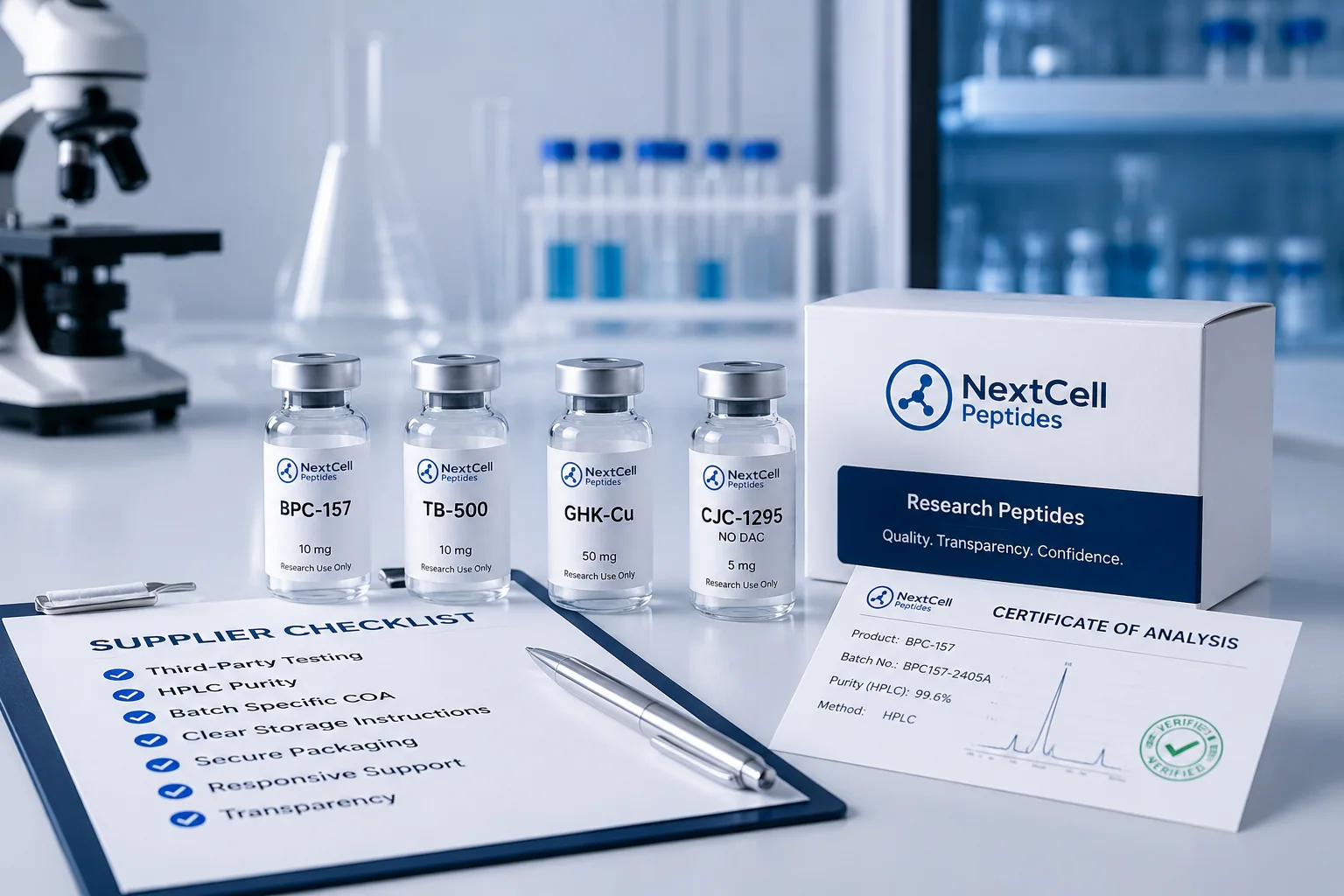
Selecting a research peptide supplier is one of the most important decisions researchers make before purchasing research materials. While price is often the first thing buyers compare, factors such as product quality, analytical testing, transparency, manufacturing standards and customer support are equally important.
This guide explains the key factors to evaluate before choosing a research peptide supplier and highlights practical questions every buyer should ask before placing an order.
Why Choosing the Right Supplier Matters
Research peptides are highly specialized products. Differences in manufacturing, purification, storage, packaging and quality control can affect the consistency of the final product.
A reputable supplier should demonstrate transparency, maintain high quality standards and provide sufficient information to help customers evaluate the products they purchase.
1. Independent Laboratory Testing
One of the strongest indicators of product quality is independent third-party analytical testing.
Look for suppliers that provide batch-specific analytical reports whenever possible.
Quality reports may include:
HPLC purity analysis
Chromatograms
Batch numbers
Manufacturing dates
Laboratory information
Independent testing provides additional confidence that products have been analyzed by laboratories separate from the manufacturer.
2. Product Purity
Purity is an important characteristic of research peptides.
High-performance liquid chromatography (HPLC) is one of the most widely used analytical methods for determining peptide purity.
A trustworthy supplier should clearly state purity specifications and explain how those values are determined.
3. Transparency
Reliable suppliers make it easy to understand what customers are purchasing.
Look for suppliers that clearly provide:
Product specifications
Storage recommendations
Batch information
Contact information
Shipping policies
Terms of service
Transparency builds confidence and demonstrates professionalism.
4. Manufacturing Standards
Although many research peptides are manufactured using similar technologies, quality standards can vary between facilities.
Consider suppliers that work with experienced manufacturers and maintain documented quality procedures throughout production and packaging.
5. Packaging Quality
Proper packaging protects research peptides during storage and transportation.
High-quality packaging may include:
Secure vial sealing
Protective secondary packaging
Clearly labeled products
Temperature-conscious shipping practices when appropriate
Packaging quality reflects the supplier's attention to detail.
6. Storage and Handling Information
Professional suppliers provide detailed storage recommendations for every product.
This typically includes:
Recommended storage temperatures
Guidance before and after reconstitution
Protection from light
Moisture considerations
Clear handling instructions help preserve product quality.
7. Customer Support
A reliable supplier should respond to customer questions promptly and professionally.
Consider whether the supplier provides:
Responsive customer support
Clear contact details
Educational resources
Frequently asked questions
8. Website Quality
While a professional website does not guarantee product quality, it often reflects the company's commitment to transparency and customer experience.
Look for websites that provide:
Detailed product pages
Educational content
Secure checkout
Clear policies
Easy navigation
9. Shipping Practices
Research peptides should be packaged carefully during shipment.
A trustworthy supplier typically provides:
Secure packaging
Shipment tracking
Discreet packaging where appropriate
Clear delivery information
10. Pricing
The lowest price is not always the best value.
Instead of comparing price alone, consider:
Product purity
Analytical testing
Customer support
Packaging quality
Company transparency
Higher overall quality may provide greater long-term value than simply choosing the least expensive option.
Supplier Evaluation Checklist
FactorWhy It MattersIndependent laboratory testingDemonstrates analytical verificationHPLC purityIndicates analytical purity measurementsProduct informationSupports informed purchasing decisionsStorage guidanceHelps maintain product integrityPackaging qualityProtects products during transportCustomer supportImproves buying experienceWebsite transparencyBuilds confidence
Frequently Asked Questions
What should I look for when buying research peptides?
Evaluate transparency, analytical testing, purity information, packaging, customer support and educational resources.
Is HPLC testing important?
HPLC is commonly used to evaluate peptide purity and is one of the most widely recognized analytical techniques in peptide quality control.
Should suppliers provide storage information?
Yes. Clear storage recommendations help customers maintain product quality after delivery.
Why does packaging matter?
Appropriate packaging helps protect products during transportation and storage.
Is the cheapest supplier always the best choice?
Price should be considered alongside product quality, analytical testing, transparency and customer support.
Final Thoughts
Choosing a high-quality research peptide supplier involves more than comparing prices. Transparency, independent analytical testing, quality documentation, professional packaging and responsive customer support all contribute to a better purchasing experience.
Taking the time to evaluate these factors helps buyers make informed decisions and select suppliers that demonstrate consistent quality standards.